Your battery and your role
What product do you supply, who places the finished battery on the market and what information is already available?
We bring product data and supporting documents together in a digital battery passport. From preparation and creation to ongoing management, with clear agreements from the outset.
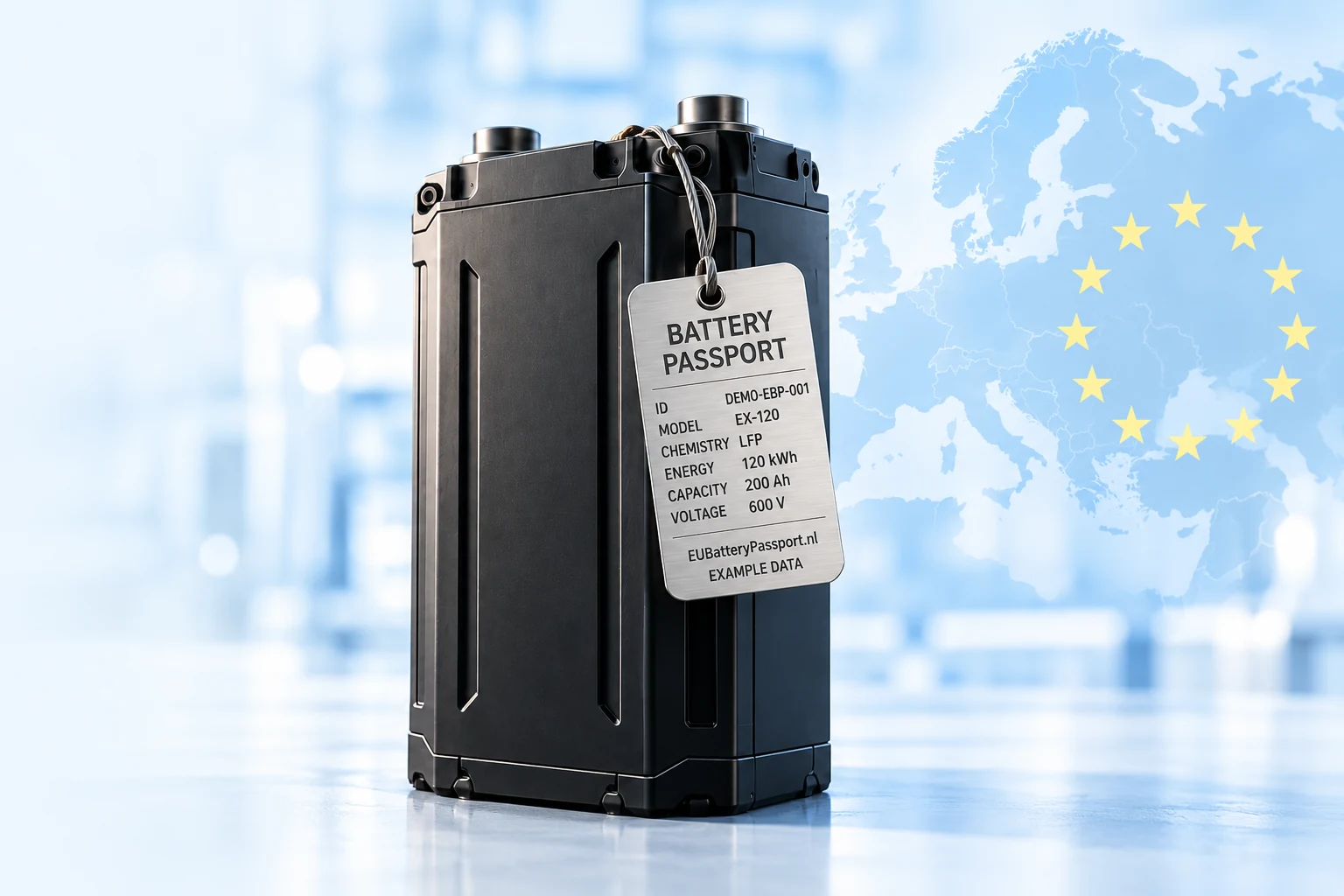
For manufacturers, importers and distributors.
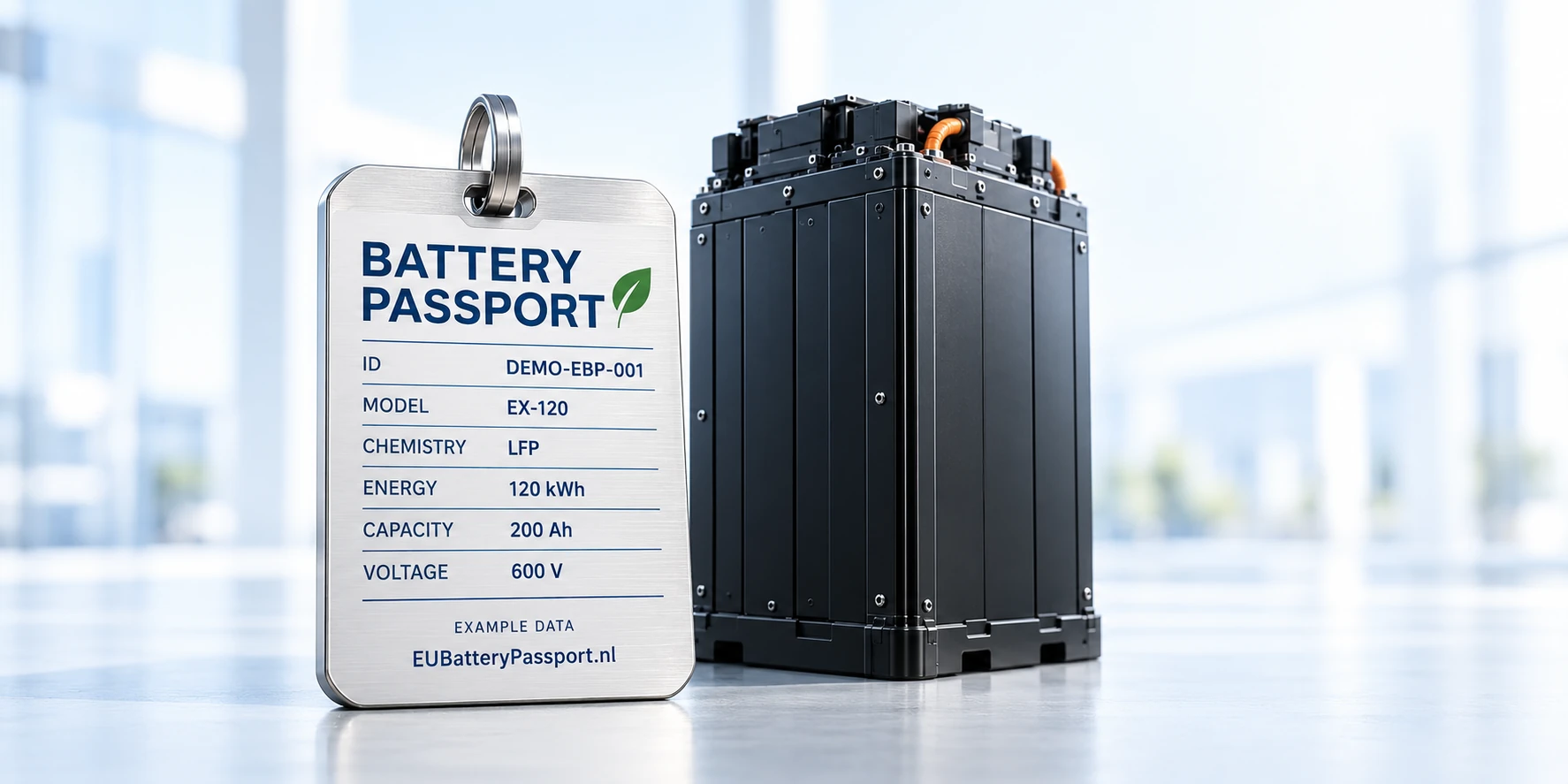
See how product data, origin and evidence come together in an example passport.
Bring product data, supplier information and evidence together.
Connect data with its supporting evidence.
Record changes, versions and responsibilities.
Start with one battery model. We identify the information you have, the evidence still needed and the work involved. This gives you a defined scope and a tailored quotation.
What product do you supply, who places the finished battery on the market and what information is already available?
Product specifications, supplier information and supporting documents form the starting point. Individual batteries have their own identity and history.
We establish who supplies data, reviews changes and keeps the passport current. The quotation separates setup, quantities and ongoing management.
From 18 February 2027, this applies to EV batteries, LMT batteries and industrial batteries above 2 kWh placed on the market or put into service. The 2 kWh threshold applies to industrial batteries.
Model data can be reused. Each individual battery within scope needs its own passport. We first determine what constitutes the finished, independently functioning battery, including any shared components.
We can create and update passports under written authorisation. The responsible economic operator retains legal responsibility. Arrangements for registration are documented separately.
Not always. Manual updates, updates during servicing or an automated connection may be appropriate. We assess the necessary update process for each battery and use case.
No. Applicability and effective dates vary by data point and battery category. We record which information is needed now, becomes applicable later or does not apply.
The reviewed Commission proposal of 29 September 2026 refers to EN 18220:2026 for data carriers and EN 18219:2026 for unique identifiers. We assess technical requirements against the applicable final acts and protect the continuity of existing passport links. A proposal alone is not evidence of an applicable amendment.
For rechargeable industrial batteries above 2 kWh, we also assess performance data, test conditions and supporting evidence. The Commission proposal of 29 September 2026 addresses performance minimums. We assess the applicable requirements and effective dates separately against final acts. This is separate from the passport deadline of 18 February 2027. An exception for exclusively external storage under performance minimums is not a general passport exemption.
No. Preparation, publication and registration are separate steps. The European Commission has published technical interfaces and semantic battery schemas. That is not evidence of a successful registration. We confirm EU registration only after verifiable, actual successful registration.
Start with what you have: the battery type, its application and available product information. You can also tell us what is still unknown in your enquiry. This gives us a practical starting point for your record.
Our service covers the process from product data and evidence through to creating and managing digital battery passports. We agree on the scope, checks and deliverables for your organisation in advance.
We review your enquiry and the available information. We then define the scope, data requirements and next steps for your organisation. There is no obligation.
Our summary of Commission information. The legislation and applicable acts remain authoritative.
Tell us which batteries you supply, what data is available and where you need support.
Start your enquiry